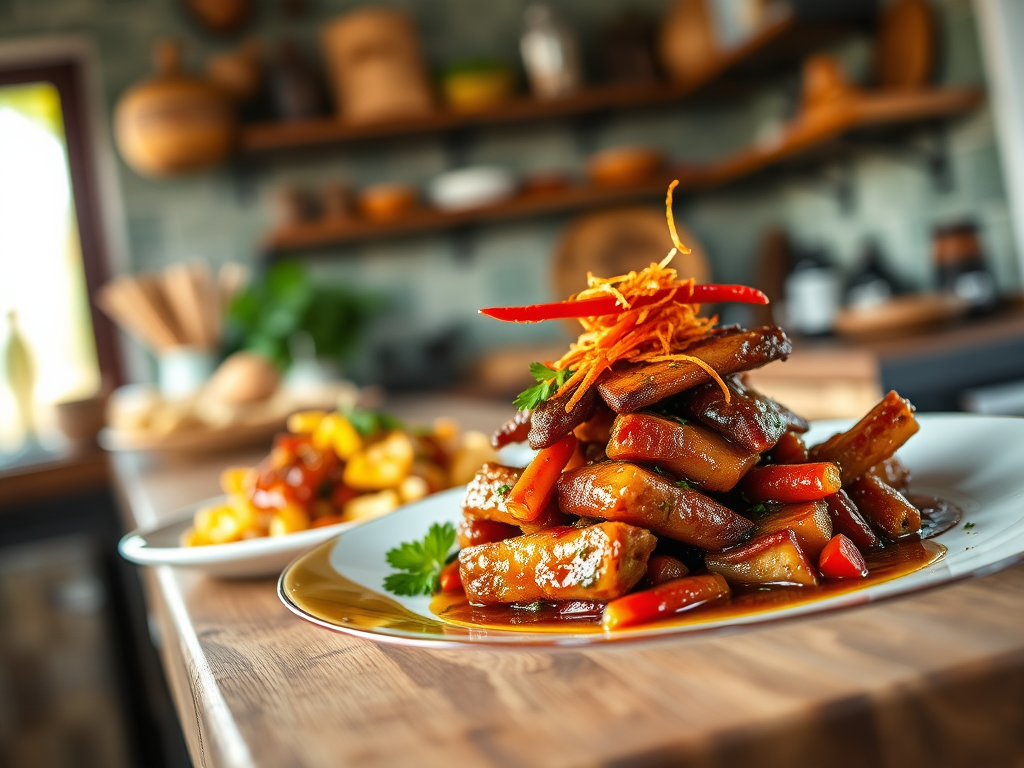
Can algorithms capture the soul of fusion cuisine? Join me as I pit nostalgia and lived experience against machine logic in a French-Guatemalan cook-off.
The Heartbeat of Fusion Cuisine
Fusion cuisine isn’t just tossing kimchi on tacos—it’s a conversation between histories. Take Nikkei, the century-old Japanese-Peruvian tradition where precise sashimi meets fiery aji peppers. But could AI, with its binary logic, replicate this alchemy for Guatemalan and French flavors? As a food stylist raised on carnitas Sundays and skeptical of algorithm-driven “creativity,” I challenged ChatGPT to a cook-off. The rules: fuse my childhood memories of Guatemala City’s bustling markets with French technique. Let the battle begin.
Two Worlds on a Plate
Guatemalan Cuisine: Born from Mayan ingenuity and Spanish colonialism, it’s a mosaic of humble ingredients—corn, beans, chiles, and the labor of hands that stretch back generations. Think pepián stew, where toasted seeds and spices whisper ancestral stories.
French Cuisine: Forged in aristocratic kitchens, it’s a legacy of technical precision—
confit, fondant, and sauces that demand obsession. But beneath the butter lies another history: a colonial past that once shaped global trade (and palates).
This clash felt ripe for fusion. But could bytes grasp the grit?
The Experiment
I armed ChatGPT with context: Guatemalan pantry staples, French techniques, and Nikkei’s “respectful remix” philosophy. Then, I tasked it with creating a dish that felt authentic.
Meanwhile, my own recipe began with memory: coming down for breakfast and being met with a traditional spread of huevos revueltos, queso fresco, crema, frijoles volteados, platoons fritos AND then find out we got carnitas and chicharrones too! No algorithm could grasp that feeling present in Guatemalan cuisine and fuse it with another… right?
The Recipes: A Sneak Peek
AI’s Approach: «Pepián-Infused Confit»
French technique + Guatemalan icons. Chicken confit rubbed with pepián spices, coconut-infused dauphinois.
“The chicken, preserved through a centuries-old French method, is awakened by pepián—a sauce born from Maya-Spanish fusion.”
Strengths: Technically sound, balanced contrasts.
Weakness: Safe. It plays by the fusion “rulebook” but lacks daring.
Human’s Creation: «Chicharrón en Confit with Jocón Rub»
French confit meets Guatemalan street food. Pork belly cured in a jocón dry rub (dehydrated herbs, chiles, seeds), served with camote fondant and anise brot.
“The jocón rub isn’t just flavor—it’s a nod to Guatemala’s Kaqchikel Maya, who used pumpkin seeds for ceremonial dishes. The confit method? A colonial imprint. Together, they’re a conversation history forgot.”
Strengths: Textural audacity (crackling skin vs. silky camote), cultural layering.
Risk: Might overwhelm purists.
Tasting Notes
AI Dish:
- First Bite: Rich chicken melts into earthy pepián spices—comforting, elegant.
- Thoughts: A competent remix, but lacks homey feeling , homecooked aspect in guatemalan cusine?
Human Dish:
- First Bite: Crackling pork skin gives way to herbal heat, cooled by tangy pickled beetroot. Star anise broth electrifies the palate.
- Magic Moment: The jocón rub—smoky, gritty, alive— feels alive, resembles a comida de feria.
- Thoughts: Real, bold, human.
Final Judgment: Can AI Replace the Chef?
AI Wins At:
- Technical harmony and Speed—it generated a coherent recipe in seconds.
Humans Reign In:
- Cultural Intuition: Chicarron is a staple and a hearty comfort food, it evokes a feeling.
- Daring: AI avoids the ugly-beautiful edges that make fusion thrilling (like pork fat fondant).
The Real Winner? Collaboration. AI is fast, has access to vast knowledge and can accurately generate what you need with the right instructions. You could use AI to brainstorm techniques, but let soul guide the way.


Deja una respuesta